Εμφάνιση αναρτήσεων με ετικέτα Greece Trikala. Εμφάνιση όλων των αναρτήσεων

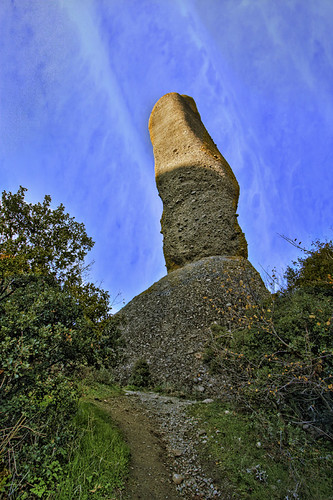
Adrahti - Αδραχτι

Adrahti - Αδραχτι by Tsavi

Ο βράχος αυτός λέγεται "Αδράχτι", λόγω σχήματος. Μπορεί  κάποιος να πάει περπατώντας από το Καστράκι. Είναι εμφανής από την πλατεία του χωριού.  Η διαδρομή είναι σχετικά εύκολη, ιδανική για άπειρους πεζοπόρους. Είναι ανηφορική, ανάμεσα από πυκνή βλάστηση στη βάση των μεγάλων βράχων. Το μονοπάτι είναι καλά σηματοδοτημένο και δεν υπάρχει περίπτωση να χαθεί κανείς. Είχα πάει στα Μετέωρα σε παιδική ηλικία με τους γονείς μου - με το αυτοκίνητο φυσικά..... Οι πέτρινοι όγκοι είναι τεράστιοι και εντυπωσιακοί και πάντα θα προκαλούν δέος με όποιο τρόπο κι αν τους προσεγγίσει κανείς, όμως αυτή τη φορά που περπατήσαμε στη βάση τους ήταν απίστευτη διαδρομή! Παρ ότι είχαμε χάρτη-οδηγό με όλα τα μονοπάτια, η ηλικία του γιου μου και ο καιρός ήταν ανασταλτικοί παράγοντες. Για ποδήλατο δεν είχε ιδιαίτερο ενδιαφέρον, εκτός από το ότι θα μπορούσαμε να έχουμε γυρίσει όλη την Καλαμπάκα -αν τα είχαμε πάρει μαζί μας-και όχι μόνο το κεντρικό δρόμο. Οι διαδρομές προς τα μοναστήρια είναι μόνο ανηφορικές και δεν ενδείκνυται για χαλαρή οικογενειακή βόλτα.

Από κάτω έχω το σύνδεσμο από το sports tracker που έγραψα τη διαδρομή: 


Trikala


Bookmark and Share


Skywatch Friday

Location on the map

Located in the fertile plain of Thessaly in central Greece, modern Trikala is the Homeric Trikka (or Trikki), the birthplace of three of the Argonauts and one of the areas touted as the birthplace of Asclepius (Asklepios), who is more often said to have been born at Epidaurus, where his main temple was sited in antiquity. Ruins of an old sanctuary to the physician-god, an Asklepieion, or healing place, are located between the central square and the church of Saint Nicholas (Agios Nikolaos) in Trikala; it is the oldest Aesculapium of Greece - a kind of medical centre, from which the worship of Aesculapius gradually spread.
There are other late Hellenistic and Roman period remains to be seen, mosaic floors, a stoa, and baths. Dominated by its Byzantine fortress on Hellenistic foundations occupying the ancient Acropolis, the picturesque city is divided in two by the river Lithaios, with the churches of Agios Demetrios and Agii Anargyri lending more Byzantine character to the modern town. She was managed by First Bulgarian Empire (920-922, 977-983, 996-997) due to occupations by Simeon I and Samuil. She was part of Great Wallachia (1204-1215), Despotate of Epirus (1215-1335), Despotate of Thessaly, who was a branch of one of Epirus, (1230-1335) (Suzerenity of Second Bulgarian Empire between 1230-1241, Nicean Empire between 1241-1261 and Byzantine Empire between 1261-1335), Serbian Empire (1348-1373), Byzantine Empire (1335-1348, 1373-1394, 1403-1411) and Ottoman Empire (1394-1403 and 1411-1881). Trikala was ceded to Greece in 1881 after Treaty of Berlin. It was captured again by Ottomans during the Greco-Turkish War of 1897 on April 28 for six months.

During the Principality of Pindus the national assembly of this state sat in Trikala.
Trikala is home to the General Hospital of the Trikala Prefecture. The Physical Education and Sport Science department of the University of Thessaly is also located in Trikala, and was founded in 1994, with the first students being admitted in the academic year 1994-1995; it was originally housed in the Matsopoulos Park facility, but moved to the new Karyes campus in July 1999. Trikala has over 20 schools of secondary education, and a modern night technical school also functions in the town.

Since December 2005, the Municipality of Trikala offers its residents free high speed Wireless Internet connection. As of 2007, around 95% of the total area of Trikala has access; this is one of the few European cities to offer such a service for free. Since 2009 tele-medicine is available for its residents, to track serious conditions without the need to visit hospitals.

Population: 137,723 (2005)
City of Trikala


Scenic Sunday
Bookmark and Share
Location on the map

Located in the fertile plain of Thessaly in central Greece, modern Trikala is the Homeric Trikka (or Trikki), the birthplace of three of the Argonauts and one of the areas touted as the birthplace of Asclepius (Asklepios), who is more often said to have been born at Epidaurus, where his main temple was sited in antiquity. Ruins of an old sanctuary to the physician-god, an Asklepieion, or healing place, are located between the central square and the church of Saint Nicholas (Agios Nikolaos) in Trikala; it is the oldest Aesculapium of Greece - a kind of medical centre, from which the worship of Aesculapius gradually spread.
There are other late Hellenistic and Roman period remains to be seen, mosaic floors, a stoa, and baths. Dominated by its Byzantine fortress on Hellenistic foundations occupying the ancient Acropolis, the picturesque city is divided in two by the river Lithaios, with the churches of Agios Demetrios and Agii Anargyri lending more Byzantine character to the modern town. She was managed by First Bulgarian Empire (920-922, 977-983, 996-997) due to occupations by Simeon I and Samuil. She was part of Great Wallachia (1204-1215), Despotate of Epirus (1215-1335), Despotate of Thessaly, who was a branch of one of Epirus, (1230-1335) (Suzerenity of Second Bulgarian Empire between 1230-1241, Nicean Empire between 1241-1261 and Byzantine Empire between 1261-1335), Serbian Empire (1348-1373), Byzantine Empire (1335-1348, 1373-1394, 1403-1411) and Ottoman Empire (1394-1403 and 1411-1881). Trikala was ceded to Greece in 1881 after Treaty of Berlin. It was captured again by Ottomans during the Greco-Turkish War of 1897 on April 28 for six months.

During the Principality of Pindus the national assembly of this state sat in Trikala.
Trikala is home to the General Hospital of the Trikala Prefecture. The Physical Education and Sport Science department of the University of Thessaly is also located in Trikala, and was founded in 1994, with the first students being admitted in the academic year 1994-1995; it was originally housed in the Matsopoulos Park facility, but moved to the new Karyes campus in July 1999. Trikala has over 20 schools of secondary education, and a modern night technical school also functions in the town.

Since December 2005, the Municipality of Trikala offers its residents free high speed Wireless Internet connection. As of 2007, around 95% of the total area of Trikala has access; this is one of the few European cities to offer such a service for free. Since 2009 tele-medicine is available for its residents, to track serious conditions without the need to visit hospitals.

Population: 137,723 (2005)

Stone bridge of Palaiokaria 10/02/2010

Stone bridge of Palaiokaria

Watery Wednesday
Wordless Wednesday
Every Day Life


Bookmark and Share


Από:
Μορφωτικός και Εκπολιτιστικός Σύλλογος Παλαιοκαρυάς Τρικάλων «Η ΓΚΡΟΠΑ»
Η Παλαιοκαρυά βρίσκετε σε μια χαράδρα ασύγκριτης φυσικής ομορφιάς σε απόσταση αναπνοής από την πρωτεύουσα των Τρικάλων. Είναι ένα τοπίο άγριο και εντυπωσιακό που δεν έχει να ζηλέψει τίποτα από τις άλλες χαράδρες της πατρίδας μας (Βίκου, Σαμαριάς, Νέστου, Αώου). Απέχει 25χιλ. από την πόλη των Τρικάλων και 11χιλ. από την Πύλη Τρικάλων. Έχει μήκος 15χιλ.περίπου και μικρότερο πλάτος 1χιλ.Το δε βάθος αρχίζει από 1χιλ. και φτάνει το 1.5χιλ.Ολόκληρο το μήκος της χαράδρας της Παλαιοκαρυάς διαρρέετε από τον Παλαιοκαρίτη ποταμό που πηγάζει από τον αυχένα της Γκρόπας ύψους 1700μ. περίπου, και εκβάλει στον Πορταικό ποταμό. Σε σύγκριση με ποταμούς άλλων xαραδρών ο Παλαιοκαρίτης  διατηρεί τα νερά του όλο τον χρόνο. Οι πλαγιές της χαράδρας είναι πετρώδεις συνήθως κατακόρυφες και το σπουδαιότερο καταπράσινες από πλούσιες συστάδες δένδρων και θάμνων που μαγεύει τον επισκέπτη δίνοντας μοναδικό αισθητικό αποτέλεσμα από τον καλύτερο καλλιτέχνη «τη φύση». Ο επισκέπτης υποκλίνεται στην ευρηματικότητα και την έμπνευση του Δημιουργού όπου η σύνθεση του τοπίου σε γεμίζει από θαυμασμό και σε μεταφέρει σε ονειρικές διαστάσεις. Μεγάλη και σπάνια ποικιλία βοτάνων και αγριολούλουδων στολίζει κατά την περίοδο της άνοιξης και του θέρους όλη την έκταση του βουνίσιου τοπίου της χαράδρας. Από πλευράς πανίδας στους απότομους βράχους, στις ξέφωτες πλαγιές και τα δάση φωλιάζουν και ενδημούν όλα σχεδόν τα άγρια ζώα και πουλιά της ευρύτερης περιοχής των Τρικάλων. Αετοί, γυπαετοί και γύπες αυλακώνουν ακατάπαυστα με το ανάλαφρο πέταγμά τους τον ουράνιο χώρο της χαράδρας και της χαρίζουν έτσι ξεχωριστή μεγαλοπρέπεια και συναρπαστικό θέαμα. Πλούσιες πηγές με κρυστάλλινα νερά αναβλύζουν από παντού αριστερά και δεξιά στις πλαγιές της χαράδρας. Υπάρχουν τρία οροπέδια που μπορεί κανείς να πάει είτε με όχημα είτε με τα πόδια (πεζοπορία).Το ένα είναι της Γκρόπας, το δεύτερο της Μπέης και το τρίτο του Καρβασαρά που μπορεί να δει κανείς όλο το Θεσσαλικό κάμπο . Αποτελείται από τους οικισμούς Άνω, Κάτω, Μέση Παλαιοκαρυά και Τσιμπιδέϊκα. Ο συνολικός πληθυσμός δεν ξεπερνά τους 250, ενώ το καλοκαίρι διπλασιάζεται. Οι κάτοικοι ασχολούνται κυρίως με την κτηνοτροφία (4.000 αιγοπρόβατα).

Translate